
The Blueprint Starts Before Birth

Before a child has language, before they have memory, before they can make sense of anything that is happening to them, they are already learning the most important lesson of their life.
Am I safe here? Will someone come? Do I matter enough to be held?
The answers they receive, in touch, in timing, in the quality of another person’s attention, become the blueprint. That blueprint, laid down in infancy, shapes the architecture of every relationship, every stress response, every moment of self-trust or self-doubt that follows, for the rest of their life.
This is not poetic licence. It is biology. And the science tells a story that runs from before birth through to the body decades later, and it ends somewhere hopeful.
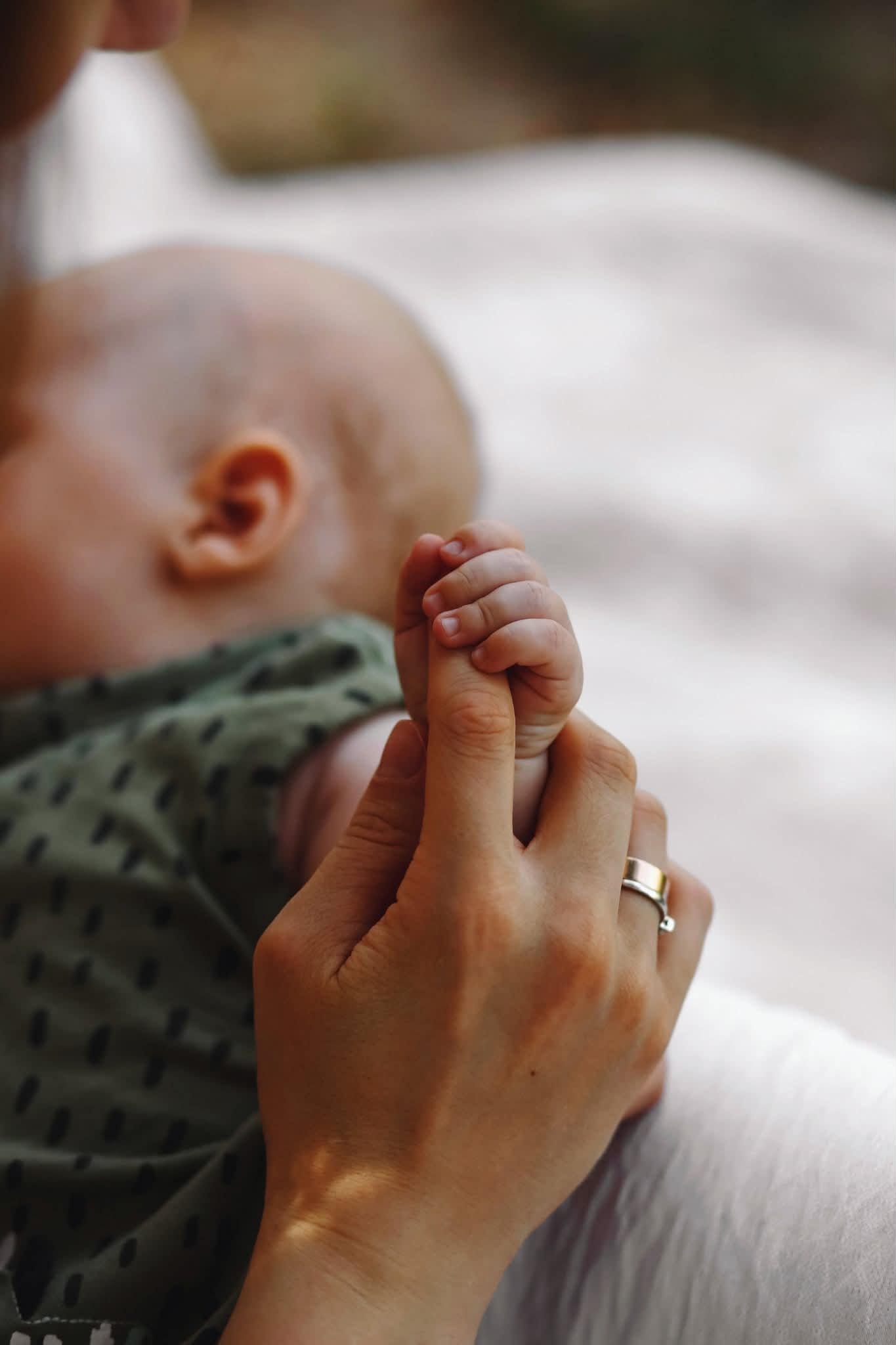
Connection is not a comfort, it is a necessity
Attachment theory, developed by John Bowlby and built on by Mary Ainsworth’s landmark research, offers one of the strongest bodies of evidence in developmental psychology. Its central finding is this: the capacity to connect, to feel safe in relationship, to trust that others are available and that we are worthy of their care, is not innate. It is built in the earliest months and years of life, through thousands of moments of attunement between an infant and their caregivers.
When those moments are consistently present, the child develops what researchers call an internal working model, an embodied, pre-verbal conviction that I belong here, I am worthy of care, others can be trusted. This becomes the template from which all future relating is organised, with partners, friends, their own children one day, and with themselves.
When those moments are absent, inconsistent, or frightening, the child still adapts, but the adaptation costs them. The avoidant child learns not to need. The anxious child learns never to feel sure. The disorganised child learns that the person who should be the source of safety is also the source of threat. Each pattern is a survival strategy, and each one carries a weight that can last a lifetime.
It starts before birth
The blueprint starts earlier than we think.
Research on prenatal stress suggests that chronic maternal anxiety during pregnancy can shape the child’s developing stress response system. The HPA axis, the hypothalamic-pituitary-adrenal system that governs how the body responds to threat, appears to be influenced before birth by the mother’s emotional environment. A child born to a mother under significant, unresolved stress may arrive with a nervous system already tuned toward vigilance, before any threat has occurred.
Some studies link this pattern to elevated risk for anxiety, attention difficulties, and disruptions to cognitive development, though the research is still developing. What it points to, even provisionally, matters. Caring for a pregnant woman’s emotional safety is not a luxury or a kindness. It is closer to a public health intervention, and it may be the first act of securing the next generation.
The fourth trimester (the first three months after birth) is now understood across neuroscience and developmental psychology as something close to a continuation of gestation. The infant who is held close, responded to reliably, soothed when distressed, and met with delight when calm is having their nervous system shaped in real time. Every moment of co-regulation is gradually internalised. The child does not just feel soothed. They learn, in their body, how to be soothed, and eventually, how to soothe themselves.
This is not softness. It is neurodevelopment, happening in real time, in ordinary moments that rarely feel significant while they’re happening.
What secure connection builds
Secure attachment does not produce a compliant child. It produces a child with a foundation, one from which everything else becomes possible.
The securely attached child has a nervous system capable of responding to genuine threat and returning to rest once it passes, rather than remaining in low-level alert. They explore, not because they feel no fear, but because they trust that if they fall, someone will catch them. The secure base is not a tether; it is a launch pad.
They develop emotional literacy, the ability to name, tolerate, and work through the full range of inner experience, because no feeling was ever treated as inadmissible. They carry relational trust, not naivety, but an open, embodied expectation that connection is possible and that they are worthy of it.
This foundation carries into the body too. Secure attachment is associated with better regulated immune function and lower rates of the stress-related conditions that tend to build up in a body held in chronic defensive readiness, things like autoimmune trouble, chronic pain, or disrupted sleep. The body keeps a record of relationship, and it keeps that record for decades.
The generational blueprint
Emerging work in epigenetics suggests that unresolved trauma and chronic unmet safety needs may influence gene expression in ways that can pass to the next generation, though this remains an active area of research. Still, it offers a useful reframe. A child presenting with anxiety or hypervigilance that seems out of proportion to their own experience may be carrying something they did not create themselves.
If that lands heavily, it’s worth sitting with what it does not mean. It does not mean fault, and it does not mean a closed loop. The adult who has not had space to process their own unmet need for safety may pass something of that on, through overprotection, through difficulty tolerating their child’s distress, through the emotional climate of a home. Naming that is not about blame. It is about understanding that working on our own early experience is not self-indulgence. It may be one of the more direct ways we change what our children inherit.
The question, when a child is struggling, shifts. Not only what is wrong with this child, but also what is this child’s system carrying, and how far back does it go.
The blueprint can be rewritten
The most important finding in the attachment research is not about what goes wrong. It is about what stays possible.
Studies of children who experienced severe early deprivation found that consistent touch, attunement, and relational presence could shift stress responses in ways that no medication alone achieved. The most effective response to a missing sense of early safety was not chemical. It was relational.
For adults, research on what attachment scientists call earned security, building new internal working models through consistently attuned therapeutic or personal relationships, suggests this kind of change is possible across the lifespan. The nervous system stays adaptable. Healing is not only the property of childhood.
This matters because the blueprint is not a life sentence. It is a starting point, and starting points, once understood, can be changed, in ourselves, in our children, and in the generations that follow.
The work of caring for a child, whether as a parent, a clinician, an educator, or a policymaker, comes down to the work of connection. Being reliably present. Showing a small person, in the ordinary moments of a day, that they are worthy of being caught.
That belief, once it settles into the body, travels forward into every life it touches.
This article draws on Chapter One of Part Two of The Push for a Child Philosophy by Dr Maxine Thérèse, and the associated research on the first Foundational Need: The Need to Be Safe and Secure.
.